Sustainability
At Hampton Court House, sustainability is not a standalone topic. It is a way of thinking that shapes how we learn, live and act as a community.
We believe education should reflect the interconnected nature of the world. Through a carefully designed whole school approach, sustainability is embedded across our curriculum, our environment and our daily practices. From Early Years through to Sixth Form, pupils develop the knowledge, habits and sense of responsibility needed to contribute to a more balanced and sustainable future.
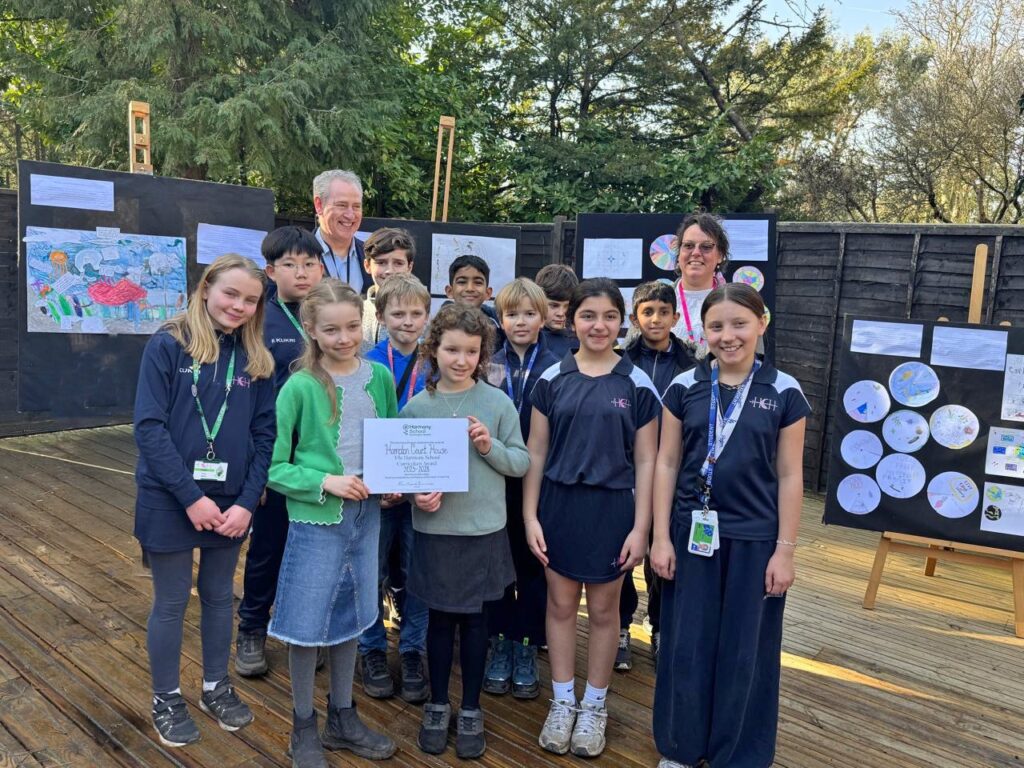
First UK Independent School to achieve Harmony accreditation
Central to our approach is the Harmony curriculum, for which we are proud to hold Harmony Project Accreditation and be the first independent school in the UK to achieve this accreditation, which is based on principles endorsed by King Charles III.
This recognition reflects a deep and sustained commitment to embedding sustainability within the curriculum, rather than treating it as an addition.
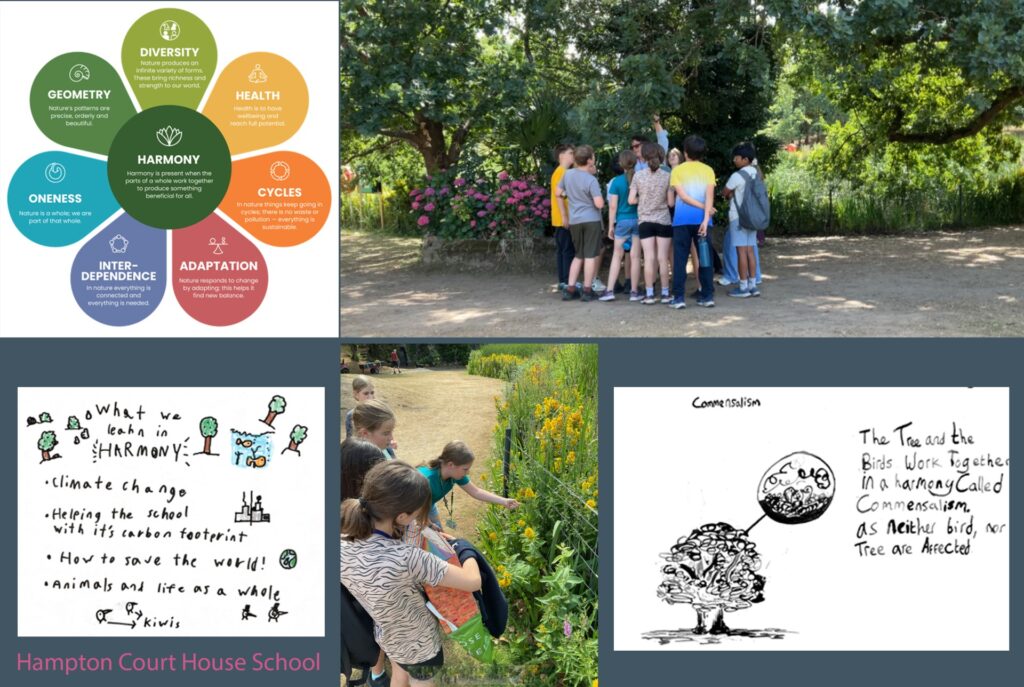
The curriculum is built around seven principles observed in nature, including interdependence, cycles, diversity and adaptation. Pupils explore these ideas in a structured and progressive way, enabling them to understand relationships, patterns and cause and effect.
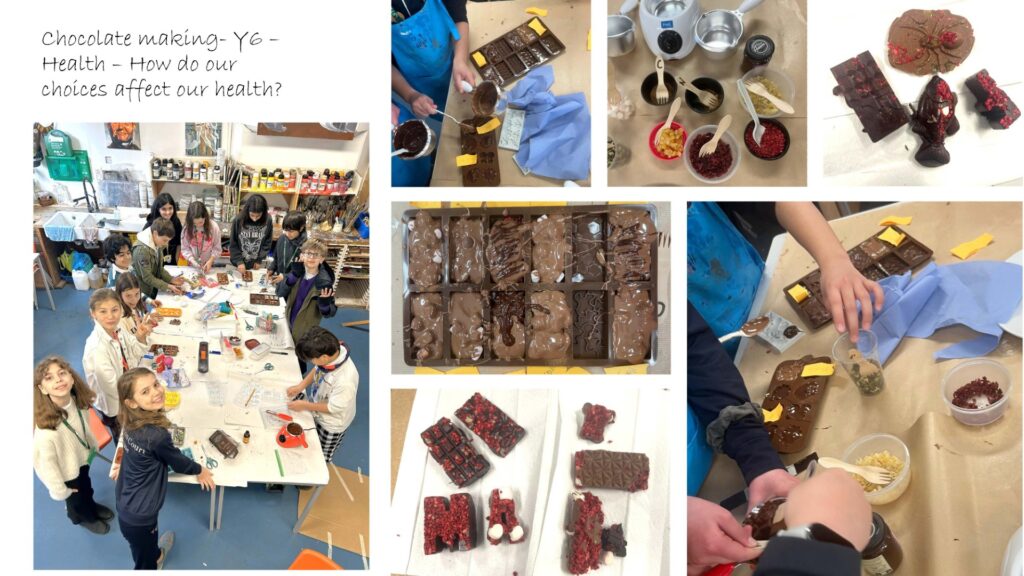
Sustainability is explored across subjects including science, art, mathematics and humanities, allowing pupils to make meaningful connections and apply their learning in real contexts. This approach develops curiosity, critical thinking and a strong sense of responsibility.
Sustainability Embedded in School Life
Sustainability at Hampton Court House extends beyond the classroom and into the daily life of the school.
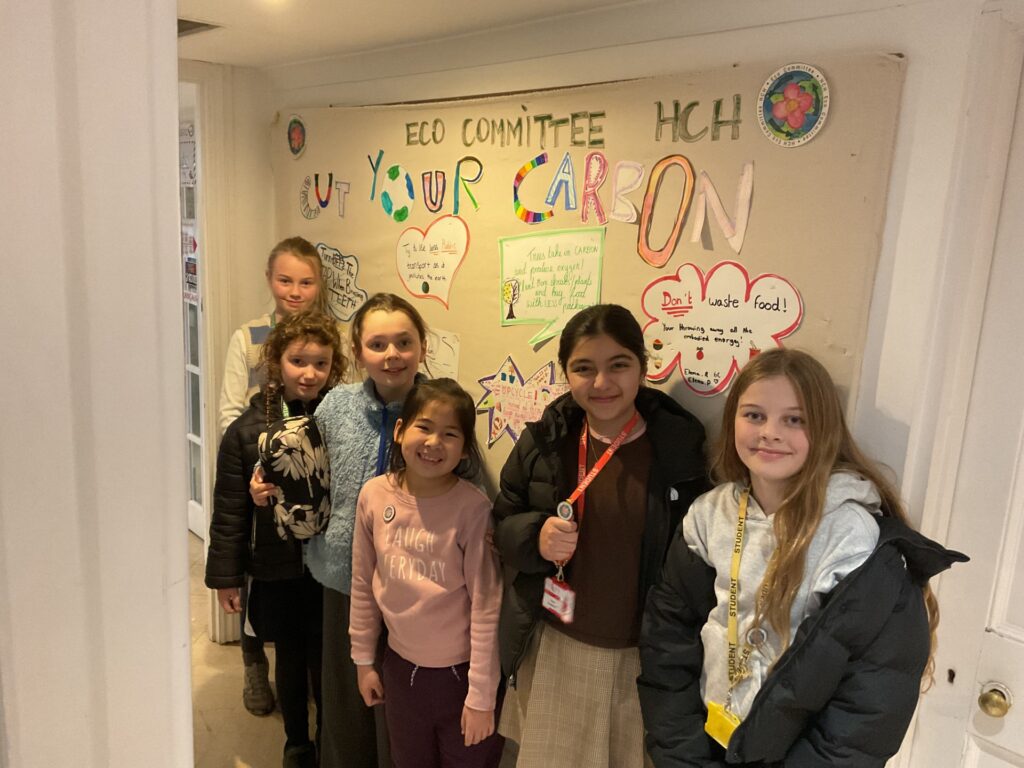
The Eco Committee, led by a Sixth Form Sustainability Ambassador, plays a central role in driving change. Pupils take part in audits of energy use and waste, and present their findings to senior leaders. This work has led to tangible improvements across the school, including the reduction of single use plastics, the introduction of structured recycling systems and greater awareness of resource use.
This pupil led approach ensures that sustainability is not only taught, but actively practised and shaped by the students themselves.
Eco-Schools Green Flag with Distinction
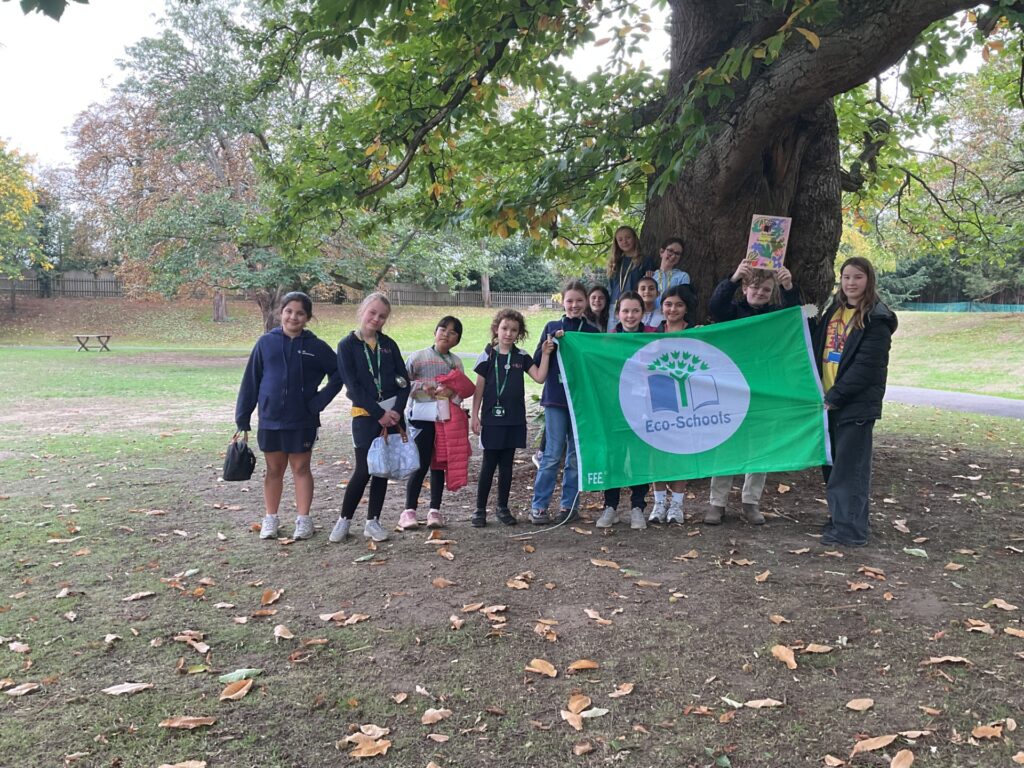
Our Eco Committee’s efforts were rewarded with the internationally recognised Eco Schools Green Flag with Distinction accreditation – the highest level of recognition for schools demonstrating an exceptional and sustained commitment to sustainability and environmental education.
The Distinction level recognises not only the measurable improvements on our school site – such as greener spaces and reduced energy use – but also the way environmental learning has been thoughtfully woven into our curriculum across subjects and year groups. This achievement reflects a whole-school effort to nurture responsible global citizens who understand the importance of protecting our planet.
A Living Environment
Our school grounds are an important part of how pupils learn about sustainability in practice.
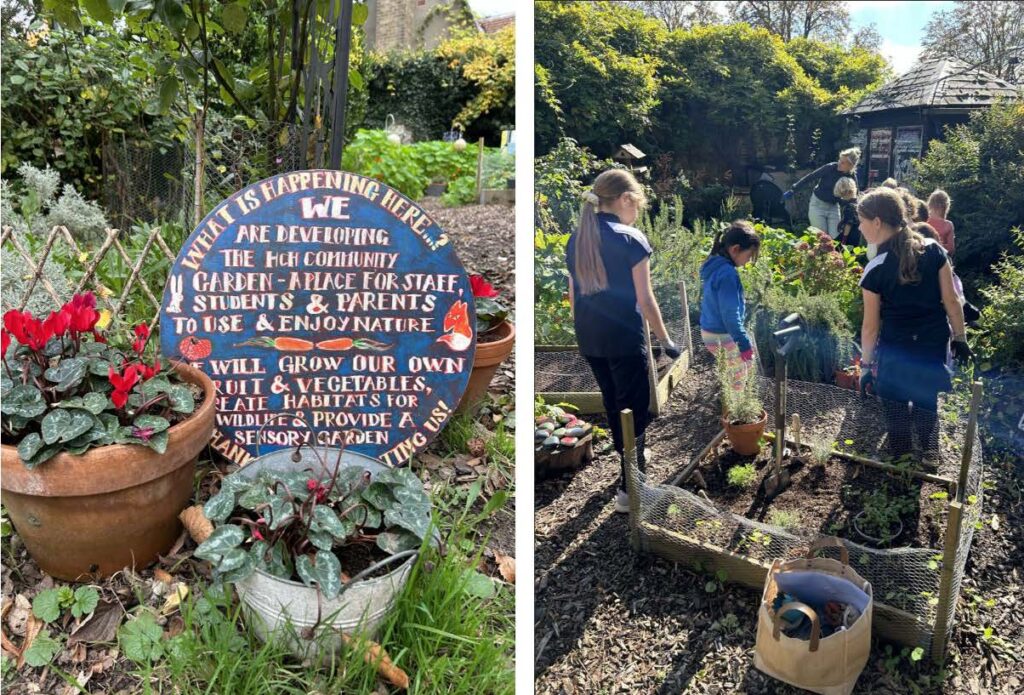
The Community Gardens sit at the heart of this work and have been awarded the highest Level 5 recognition by the Royal Horticultural Society. Supported by the Gardening Club, pupils are involved in growing herbs and vegetables that are used in the school kitchens, creating a direct connection between food production, sustainability and daily life.
The gardens also support biodiversity and environmental awareness, with planting designed to encourage pollinators and promote healthy ecosystems. Alongside this, features such as rainwater collection help pupils understand the responsible use of resources.
Learning Through Action
A defining feature of our approach is the alignment between what pupils learn and what they do.
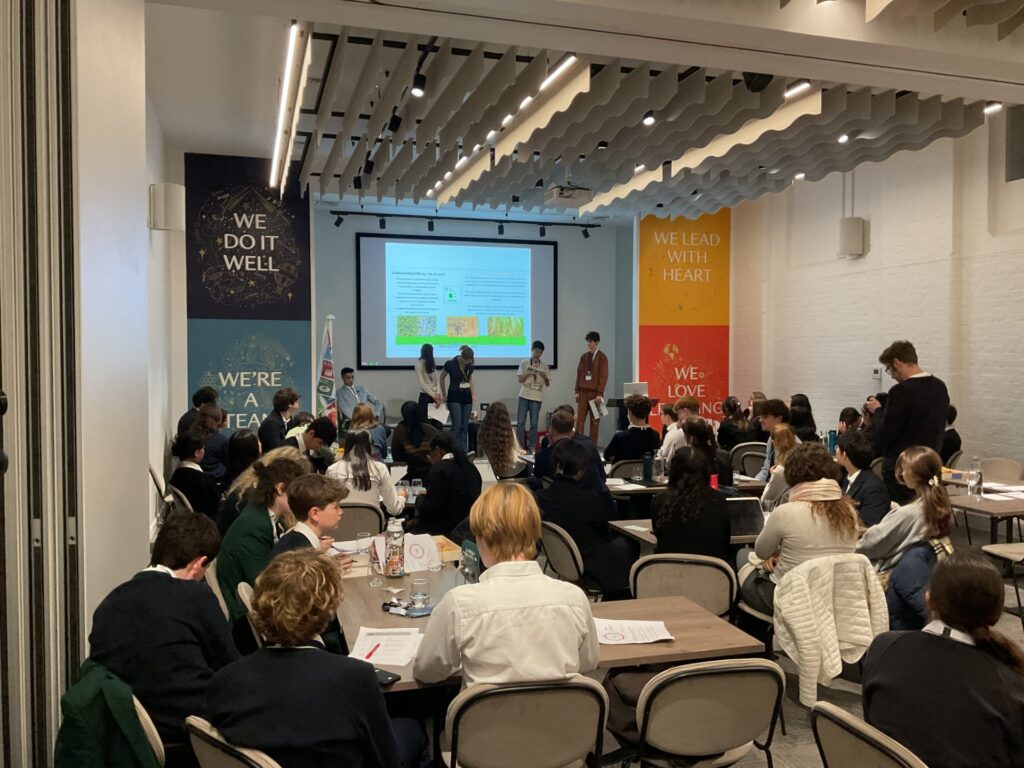
Pupils take part in hands on projects, design challenges and enquiry based learning linked to real world issues and the United Nations Sustainable Development Goals. They are encouraged to think critically, take responsibility and apply their understanding in practical ways.
This consistency ensures that sustainability becomes part of everyday behaviour.
Impact Beyond the Classroom
The impact of this approach is seen not only within the school, but beyond it. Pupils develop into thoughtful and informed individuals who carry their learning into their daily lives.
Families often report that pupils influence decisions at home, from reducing waste and conserving energy to making more sustainable choices. This reflects a deeper level of understanding, where learning leads naturally to action.
Looking Ahead
We continue to build on these strong foundations, extending the Harmony approach into the senior school and strengthening opportunities for student leadership and real world engagement.Our aim is that every pupil leaves Hampton Court House with the mindset, knowledge and confidence to play a positive role in shaping a sustainable future.